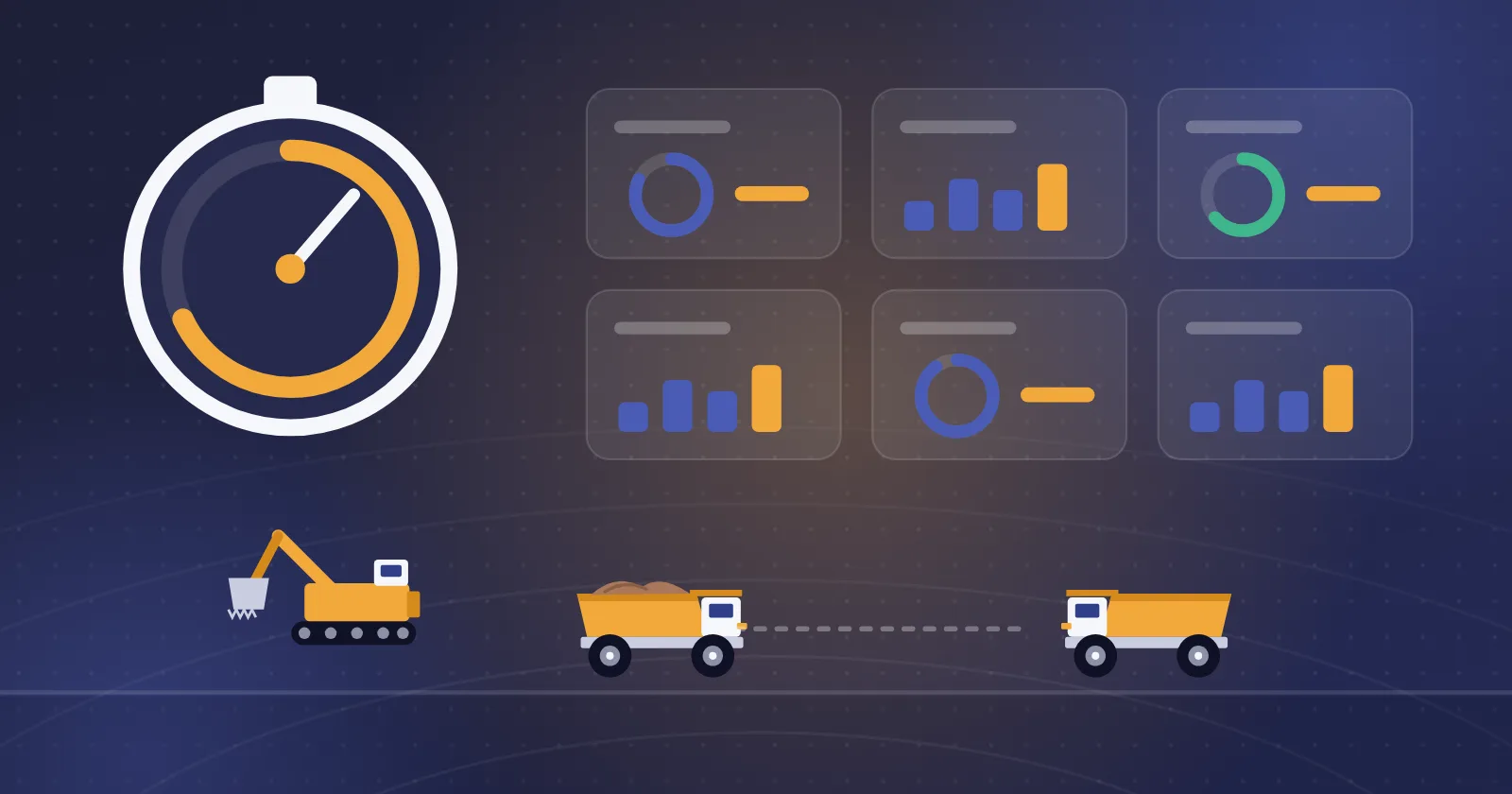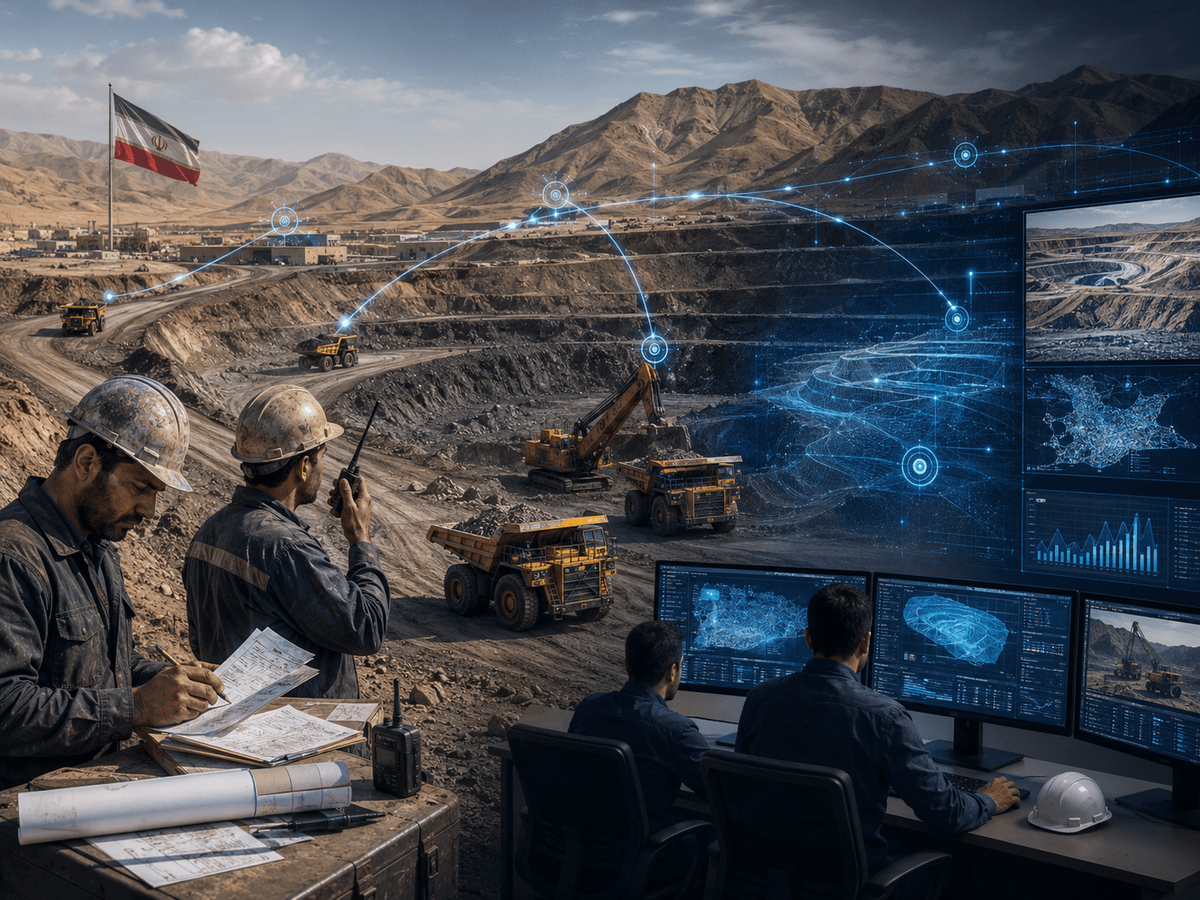
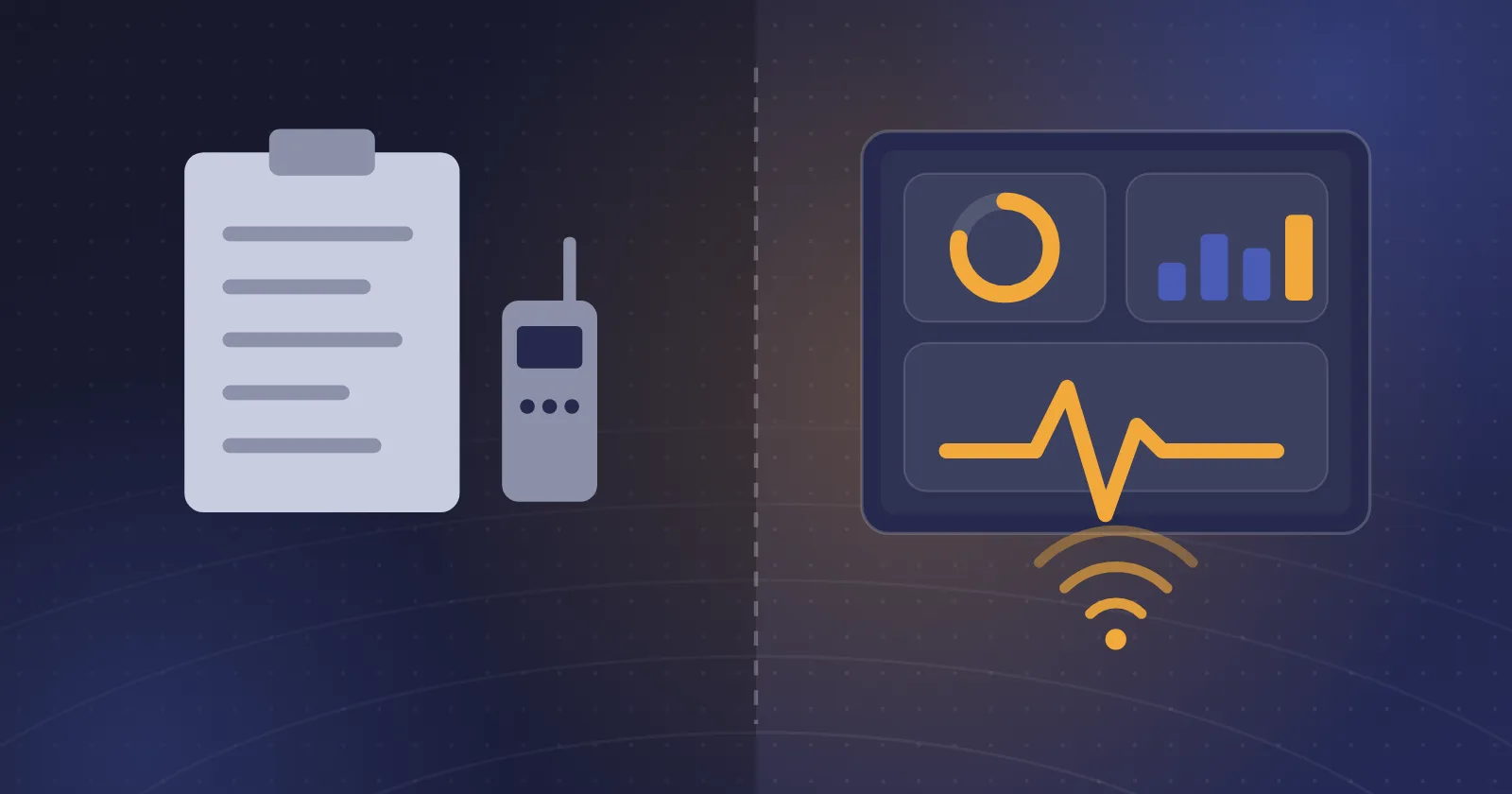
The difference between a traditional and a smart mine is not just a matter of having software, trackers or a few screens in the control room. The real difference lies in how information is collected, how quickly problems are detected and how data is used for operational decisions.
In traditional mine management, much of the information is gathered through manual reports, radio calls, site inspections and supervisors' experience. This approach is still used in many mines, but information may reach managers late or be scattered across departments.
In a smart mine, data on the fleet, haul cycle, fuel use, stoppages, production and safety is collected and analysed systematically. Managers can therefore see problems sooner and act to correct operations within the same shift.
Below, we compare traditional and smart mines across 20 real operational indicators.
What is a traditional mine?
A traditional mine is not necessarily one that uses no technology or software. A mine may use a weighbridge, trackers, Excel files or maintenance software, but the information from these tools is not connected to an integrated decision-making flow.
Common features of traditional mine management include:
- Recording information on forms, in logbooks or in separate files
- Communication between departments by radio and phone
- Decisions based on individual experience
- Production reports at the end of the shift
- Difficulty identifying the exact cause of stoppages
- Heavy dependence on supervisors and experienced staff
- No integrated view of fleet and production status
Staff experience plays an important role in this model. Problems arise when the information managers need is incomplete, late or not comparable.
What is a smart mine?
A smart mine uses equipment, data and management systems to improve operational decisions. Its main aim is not to remove people or fully automate machines, but to create a clearer view of what is happening in the mine.
The main components of a smart mine can include:
- Automatic data collection
- Equipment condition monitoring
- Recording the loading and haulage cycle
- Viewing operations on a management dashboard
- Better fleet assignment
- Recording and classifying stoppages
- Operational alerts
- Detailed shift reports
- Connections between fleet, fuel, weighing and maintenance systems
With Bistun Kavir's mine digitalisation solutions, each part of the operation can be monitored on its own or as part of an integrated system, depending on the mine's real problems and needs.
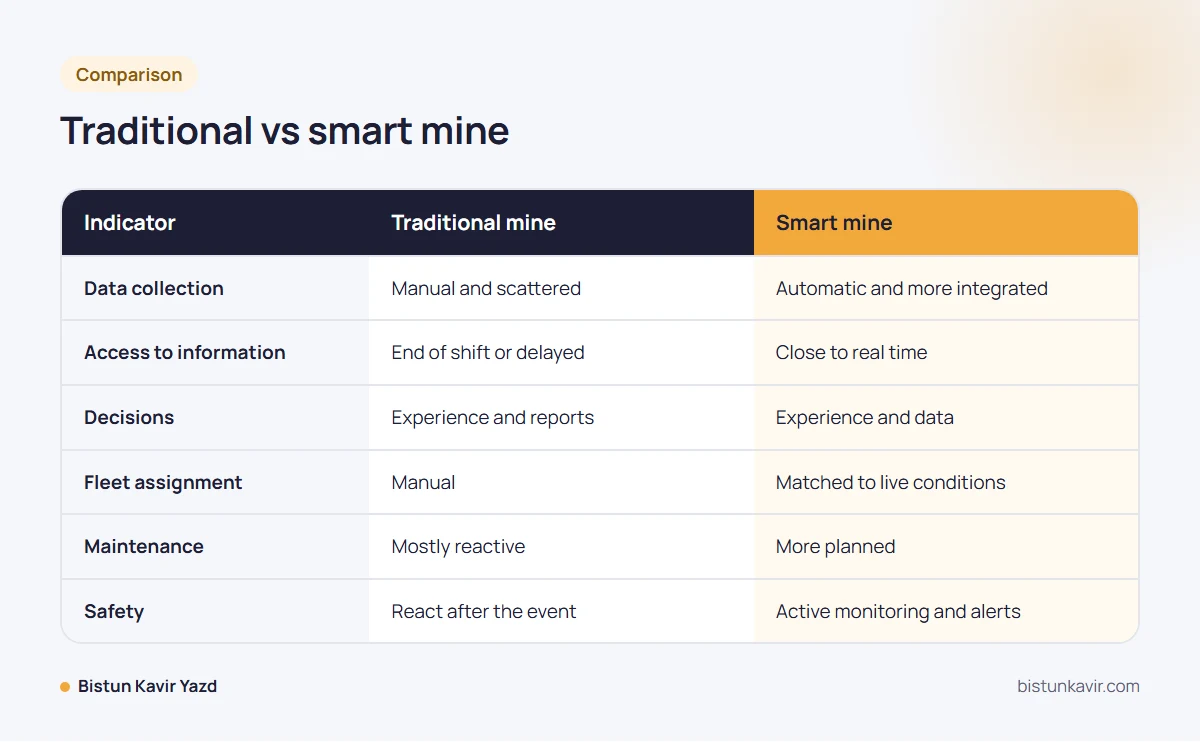
Traditional vs smart mine comparison table
| Indicator | Traditional mine | Smart mine |
|---|---|---|
| Data collection | Manual and scattered | Automatic and more integrated |
| Access to information | End of shift or delayed | Close to real time |
| Decision-making | Based on experience and reports | Based on experience and data |
| Fleet control | Calls and site observation | Centralised monitoring |
| Machine assignment | Manual | Matched to operating conditions |
| Stoppage recording | Depends on operator reports | More systematic recording and classification |
| Fuel control | Periodic checks | Monitoring of consumption and discrepancies |
| Production reporting | Manual and error-prone | Structured and analysable |
| Maintenance | Mostly reactive | More planned |
| Safety | Reaction after a problem is seen | More active monitoring and alerts |
This table gives an overview. To understand the difference properly, each indicator needs to be examined in the context of real operations.
1. How operational data is collected
In traditional management, loading times, trip counts, stoppages and machine performance may be recorded by operators or supervisors. Manual entry increases the chance of omissions, errors and discrepancies between departments' reports.
In a smart mine, part of the data comes directly from equipment and systems. A machine's arrival at the loading point, stop durations, routes and dumping times can be stored without constant manual entry.
Automatic collection does not mean removing human oversight entirely. Data still needs to be reviewed, validated and presented as usable indicators.
2. How quickly managers get information
In a traditional mine, a manager may only find out at the end of the shift that truck waiting times have risen. By then, the chance to correct that shift's operations is gone.
In smart management, changes in waiting time or queues forming can be seen close to when they happen. The manager or dispatcher can investigate the cause and, if needed, change machine assignments.
The main benefit is not just seeing information sooner; it is the chance to react before a limited problem turns into a wider loss of production.
3. How decisions are made
Decisions in a traditional mine usually rely on managers' experience, supervisors' reports and calls with operators. That experience is valuable, but not all the information needed may be available at the time.
In a smart mine, managers can review real operational data as well as using their experience. For example, the performance of two haul routes, machine cycle times or the number of stops in different shifts can be compared.
Technology does not replace the manager's experience; it gives them more accurate information.
4. Fleet management and assignment
In the traditional approach, haul trucks are usually assigned to shovels and routes by radio or a predetermined plan. If a shovel breaks down, a road is closed or a queue forms, correcting assignments may be delayed.
In a mine dispatching system, the status of machines, working faces and the haul cycle are reviewed together. This helps operations staff coordinate the number of loading and haul machines better.
Position tracking only shows where a machine is. Dispatching must show what stage the machine is in and how its assignment affects operations.
5. Haul cycle time
A haul cycle usually consists of several stages:
- Waiting to load
- Loading
- Travelling loaded
- Dumping
- Returning empty
- Stops along the route
In a traditional mine, accurately measuring each stage may depend on operator records or limited sampling.
In a smart mine, the share of each stage in total cycle time can be reviewed. This breakdown helps show whether a longer cycle was caused by queues, routes, loading or abnormal stops.
6. Waiting time and queues
Queues form when the number of haul machines does not match loading or dumping capacity. Equipment breakdowns, slow routes or poor assignment can also increase waiting time.
In the traditional model, queues are usually identified through site observation or driver reports. In the smart model, haul cycle and stoppage data make it possible to detect queue patterns faster.
Seeing a few trucks next to each other on a map is not enough. To solve a queue, its cause and the length of the wait must also be known.
7. Managing stoppages and idle time
Not all stoppages have the same cause. A stop may be due to:
- A technical fault
- A loading queue
- An operator stop
- A road closure
- Planned maintenance
- No working face available
- An unknown cause
In a traditional mine, some stoppages are never given a recorded cause. A smart system should not only detect stops but also allow their causes to be classified and analysed.
Simply showing whether a machine is on or off does not provide enough information to improve operations.
8. Fuel consumption control
In traditional management, fuel information is usually gathered from delivery slips, tanks, refuelling records and periodic reports. Matching this information with real machine performance can be difficult.
A mine fuel control system can review each machine's consumption, refuelling quantities, discrepancies and the link between consumption and operating hours or production.
This information does not guarantee lower consumption, but it helps managers identify abnormal use, long stops with the engine running or differences in machine performance.
9. Measuring production each shift
In a traditional mine, the production report may be compiled from weighbridge data, trip counts and supervisors' reports. Preparing it takes time and the sources may not agree.
In a smart mine, indicators such as cycle counts, tonnage moved, each machine's performance, production per route and the gap between plan and actual are prepared more quickly.
The aim is not to remove human oversight but to reduce the time spent collecting and reconciling information.
10. Loading and overload control
Underloading wastes haul capacity, while overloading can affect safety, wear and machine performance.
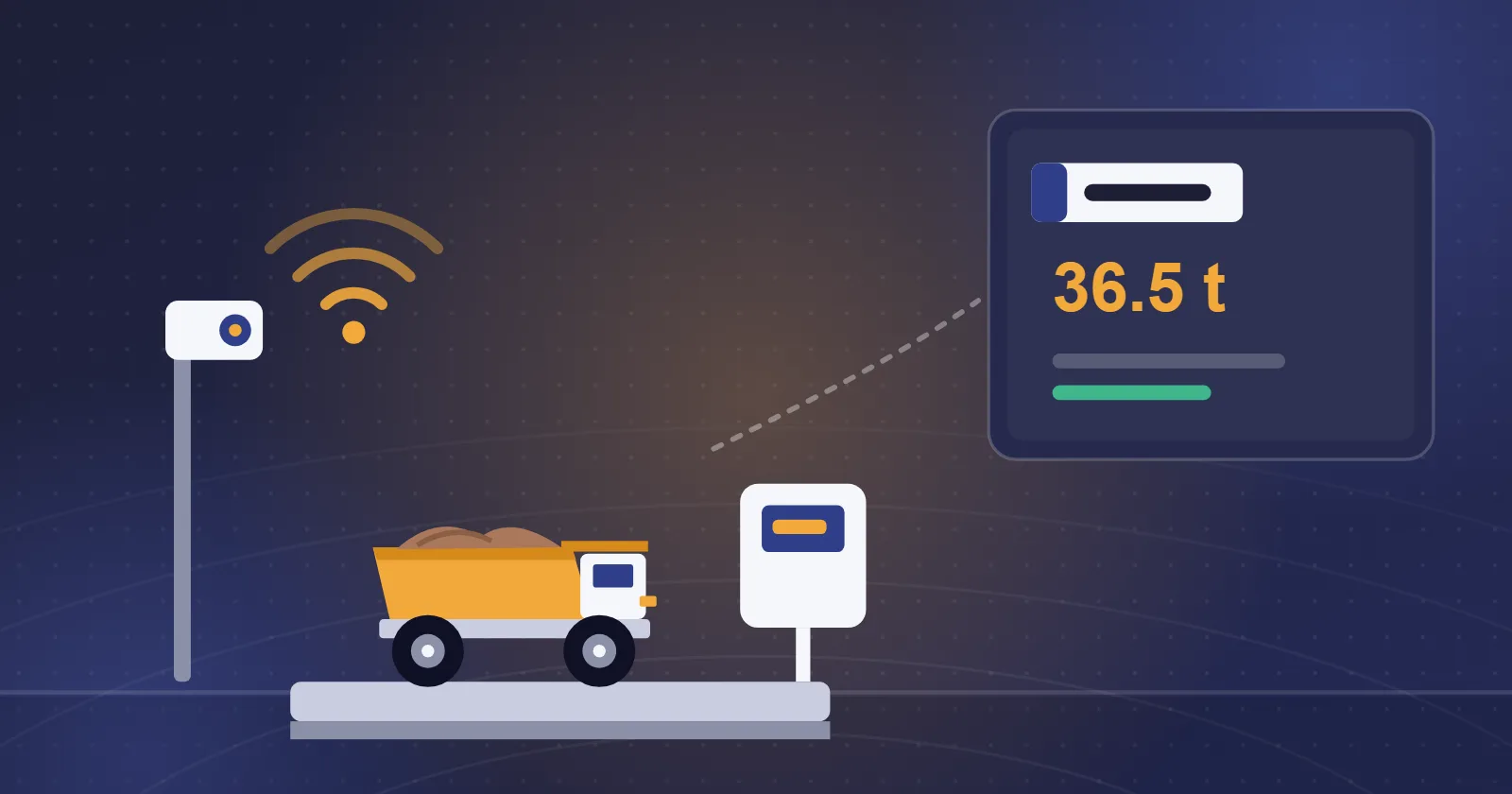
In the traditional approach, payload checks rely mainly on the weighbridge and periodic controls. In the smart model, data from a weighing and loading control system can be linked to the machine, operator, route and shift.
This link shows which machine or working face most often faces underloading or overloading.
11. Equipment maintenance
In reactive management, repairs are carried out after a breakdown. This can cause sudden stoppages and disrupt the production plan.
A smart mine can give maintenance access to operating hours, technical alerts, stoppage patterns and machine history. This data makes service and preventive maintenance planning more accurate.
The system alone does not eliminate breakdowns, but it provides the information needed to reduce guesswork.
12. Operational safety
In traditional management, some risky behaviours are only recorded after a supervisor sees them or an incident occurs. Smart systems can monitor speeding, leaving the route, abnormal stops and entry into restricted zones.
A driver monitoring system can also help detect some signs of fatigue or reduced concentration.
These systems do not eliminate incidents, but they can make some high-risk conditions visible sooner.
13. Quality of management reports
Traditional reports are usually compiled from several forms and files, which makes comparing machines, routes and shifts difficult.
Smart reports can be filtered by machine, operator, route, shift and time period. Managers can see trends and investigate unusual changes.
The value of a report is not in the number of charts. A report should answer a specific operational question.
14. Dependence on individuals
In many mines, experienced people have detailed knowledge of the machines, routes and operational problems. Without them, passing on information and making decisions can be difficult.
In a smart mine, part of the operational knowledge is captured as data, reports and decision history. This reduces dependence on individual memory, although human experience remains essential for interpreting conditions and making decisions.
15. Performance analysis
In traditional management, accurate performance comparisons may be difficult because data is scattered.
In data-driven management, you can review:
- Each machine's performance
- Each operator's performance
- Shift comparisons
- Haul route performance
- Cycle time trends
- Changes in fuel consumption
- Production changes over different periods
These analyses should be used to improve operations, not just left on a dashboard.
16. Integration across mine departments
Production, fleet, fuel, maintenance, weighbridge, safety and planning all need shared information.
In the traditional model, each department may keep its own information separately. As a result, investigating a drop in production means reconciling several reports.
The aim of a smart mine is for data from different departments to feed one shared decision-making flow.
17. Forecasting and planning
A smart mine cannot predict every breakdown or disruption. Even so, observing operational trends can make planning more accurate.
Past and current data can be used to estimate:
- The number of machines required
- Haul route capacity
- The maintenance schedule
- Fuel consumption
- Production per shift
- The number of active machines
Forecasting is only valuable when it is based on reliable data and the mine's real conditions.
18. Speed of response to operational problems
Suppose a shovel breakdown has caused the truck queue to grow. In traditional management, news of the breakdown may only reach the operations manager after several calls.
In smart management, the shovel stop and the rise in waiting time can appear as a change in indicators or an alert. The manager still needs to investigate the cause, but the time before a response begins is shorter.
19. System scalability
Standalone tools may suit a limited problem but become a constraint as the project grows.
A scalable system should allow:
- Adding machines
- More users
- Connecting to other systems
- Expanding reports
- Use across several pits
- Managing several mines
System selection should consider the mine's development plans as well as current needs.
20. Measuring return on investment
In a traditional mine, measuring the effect of a change can be difficult because there is no accurate baseline.
In a smart mine, the before and after situation can be compared using indicators such as waiting time, cycle counts, stoppages, fuel consumption and machine utilisation.
The value of digitalisation should be measured by real changes in operational indicators, not by how much equipment has been bought. For the budget components and price factors involved, see our article on the cost of mine digitalisation.
Does every mine need to become fully smart?
There is no need to digitalise every process in the mine at once. A broad rollout without a clear problem can increase project cost and complexity.
A starting point could be one of the following:
- Haul fleet control
- Reducing waiting time
- Fuel consumption monitoring
- Loading control
- Monitoring driver behaviour
- Recording and classifying stoppages
Once the result has been measured, the project scope can be extended to other areas.
The path from a traditional to a smart mine
A phased transition usually includes these steps:
- Identify the main operational problem
- Set baseline indicators
- Review existing equipment and infrastructure
- Choose a pilot area
- Install equipment and commission the system
- Train users
- Measure changes in the indicators
- Improve operational processes
- Extend the project in stages
Before a full rollout, it should be clear what data will be collected, who will review it and what decisions will be made based on it.
The biggest mistakes in moving to a smart mine
Common mistakes include:
- Starting the project without a clear problem
- Focusing only on buying equipment
- Treating GPS as the same as dispatching
- Collecting data that management never uses
- Not setting a baseline
- Neglecting user training
- Full rollout without a pilot phase
- No one clearly responsible for managing data
- Choosing a system that cannot scale
- Expecting immediate results without changing processes
Digitalisation is not purely a technical project. Processes, responsibilities and decision-making must also adapt to the new information.
Conclusion: traditional or smart mine?
Traditional mine management does not necessarily mean inefficient management. Supervisors' experience, knowledge of operators and on-site decisions remain an important part of mining operations.
The main difference between a traditional and a smart mine is not the number of digital devices; it is the ability to turn operational data into actionable decisions.
A smart mine creates value when:
- Data is accurate and reliable.
- Operational indicators are clearly defined.
- Managers use the reports in their decisions.
- Operational processes are improved based on data.
- The project is matched to the mine's real problem.
- The system is extended in stages.
Starting digitalisation does not require changing every process in the mine at once. Reviewing the fleet, haul routes, stoppage time, fuel consumption and reporting can show which area should take priority for a pilot.
Which indicator in your mine's operations most needs a clearer view?
Frequently asked questions
What is the main difference between a traditional and a smart mine?
The main difference lies in how information is collected, how quickly data is available and how it is used for operational decisions.
Does installing GPS make a mine smart?
No. GPS usually shows a machine's position and route. A smart mine needs analysis of the haul cycle, stoppages, fleet assignment, production, fuel and other operational indicators.
Where should mine digitalisation start?
It is best to start with the mine's most important operational problem, such as waiting time, fuel consumption, fleet assignment, underloading or machine stoppages.
Does a smart mine need fewer people?
The main aim of digitalisation is not to reduce headcount. Smart systems give operators, supervisors and managers more accurate information.
How do you measure the success of a digitalisation project?
Success is measured by comparing indicators before and after implementation, including cycle time, waiting time, production, stoppages, fuel consumption and machine utilisation.