
- Pressure of each tire
- Abnormal temperature rise
- Pressure loss and gradual leaks
- Fleet status from one center
- Change history
A tire problem doesn’t start only when the machine stops
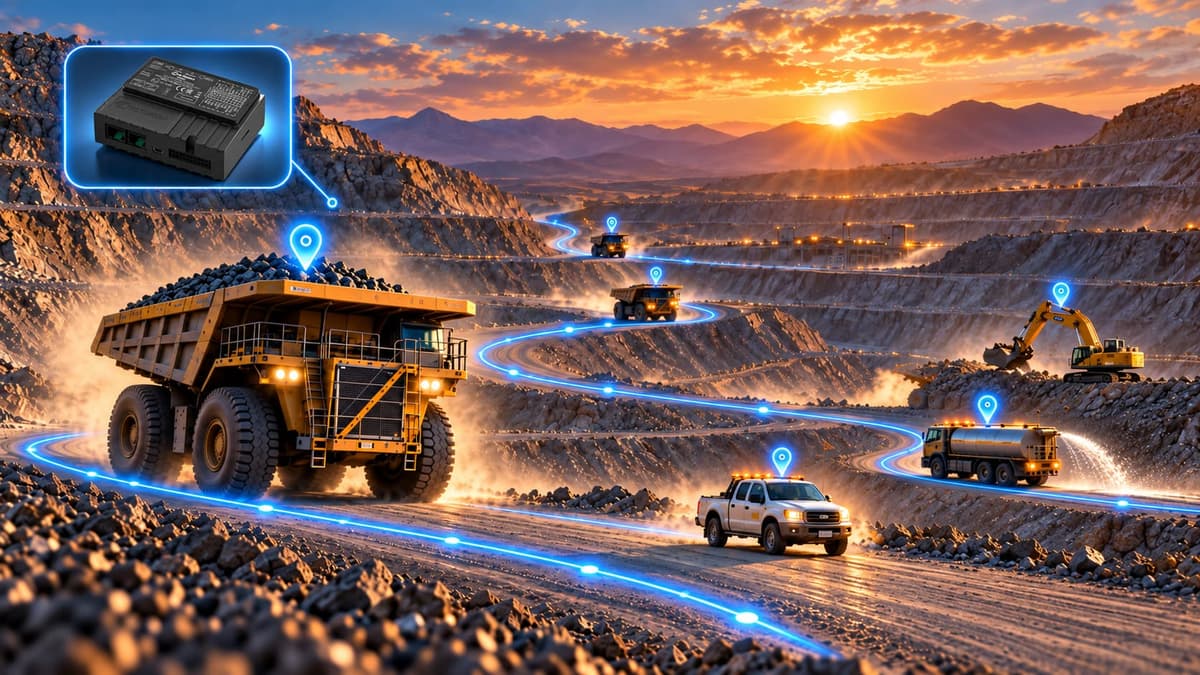
Mining machinery works in harsh conditions; heavy loads, long routes, changing road surfaces and continuous operating hours put great stress on tires. Many tire problems show signs before failure; signs that may go unnoticed at first but later shorten tire life, raise repair costs or stop the machine.
The key question is: should we wait for a tire problem to be found in a manual inspection or after a failure? TPMS makes it possible to see tire condition during operation.
Signs that can be seen earlier
- Low air pressure
- Excessive temperature rise
- Gradual leak
- Pressure differences between tires
- Continuing to work under abnormal conditions
What is TPMS?
TPMS stands for Tire Pressure Monitoring System. It receives tire condition data from installed sensors and makes it available to users for monitoring and analysis. In mining applications, TPMS monitors tire temperature in addition to pressure.
TPMS doesn’t just tell you “what the tire pressure is”; the aim is to make abnormal conditions visible before they turn into a bigger failure.
TPMS answers these questions
- Which tire has gone outside the normal range?
- Is the pressure dropping?
- Has the tire temperature risen abnormally?
- Is a problem recurring at a specific position?
From tire sensor to operational alert
- 1
Collecting data from the tire
Sensors installed on the tire or wheel record pressure and temperature.
- 2
Data transmission
Data is transmitted to the system over the communication infrastructure.
- 3
Data processing
The status of each tire is compared against defined ranges.
- 4
Dashboard display
Users view the status of machinery tires.
- 5
Alert generation
Alerts are generated on pressure loss, rising temperature, or other abnormal conditions.
- 6
Operational action
The operations or maintenance team reviews the equipment status and makes the appropriate decision.
What does TPMS monitor?
Pressure of each tire
Shows tire pressure and identifies conditions outside the defined range.
Tire temperature
Monitors abnormal temperature rises that may indicate poor working conditions or a tire problem.
Pressure loss
Detects pressure drops and helps investigate leaks or other potential issues.
Sudden changes
Detects rapid pressure or temperature changes that call for more urgent inspection.
Tire position
Identifies which wheel or tire on the machine an alert relates to.
History and alerts
Pressure and temperature trends across shifts, with notifications when defined limits are exceeded.
What problems does TPMS solve in mining?
Lower risk of sudden tire failure
When pressure or temperature changes are spotted earlier, the technical team has more time to investigate. The goal is not to predict every failure, but to deliver measurable indicators to the user.
Fewer tire-related stoppages
A tire failure can take a machine out of service and affect hauling operations for dump trucks. TPMS helps identify abnormal conditions before a complete stoppage.
Support for usable tire life
Prolonged operation at improper pressure increases wear or damage; continuous monitoring helps create better operating conditions.
Less reliance on manual inspection
A manual check shows the condition at a single moment; TPMS enables continuous monitoring between two inspections.
Better tire maintenance management
Instead of reacting after a failure, alerts and trends become the basis for prioritizing inspections.
Tire pressure alone is not enough; the trend matters more
A tire’s pressure may be within the allowed range yet decline steadily over several hours. A single spot measurement won’t show this; continuous data logging reveals the trend.
Without TPMS
- Periodic checks
- Spot-in-time information
- Late detection of changes
- Greater reliance on manual inspection
- Reacting after the problem is seen
With TPMS
- Continuous monitoring
- Visibility into trends
- Faster detection of abnormal conditions
- Central access to fleet status
- Ability to act earlier
What information should a TPMS alert provide?
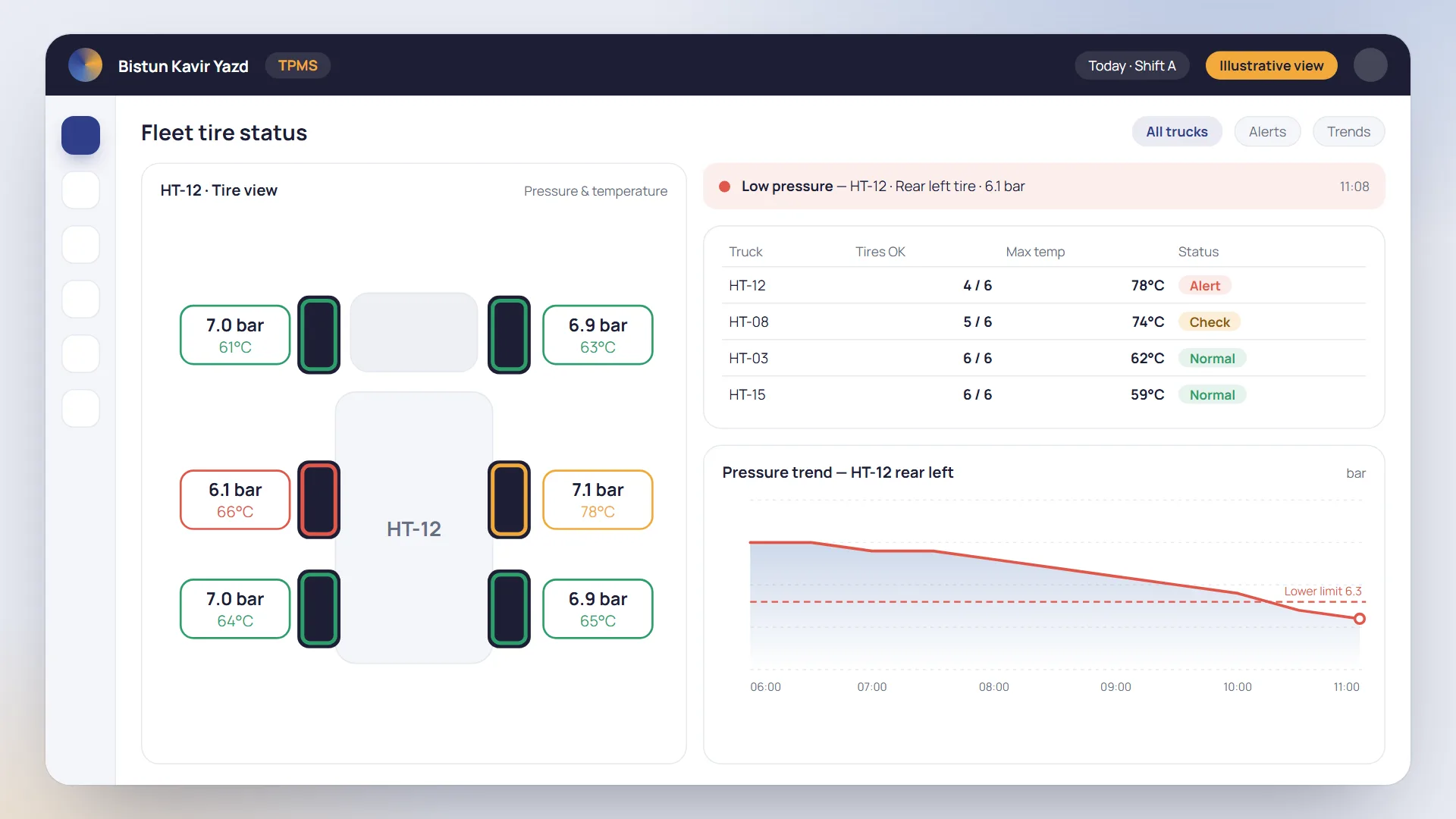
An alert is useful when the user immediately knows which machine and which tire the problem relates to, without searching through large amounts of data.
Demo example
Rear right tire
Front left tire
TPMS dashboard: fleet tire status at a glance
Depending on project capabilities, the system dashboard can show machinery status, pressure and temperature of each tire, active alerts and their history, machines needing inspection, and pressure and temperature trends.
Who uses it
- Fleet manager: overall tire status and equipment needing inspection
- Maintenance: alerts, trends, and tire service planning
- Operations manager: lower risk of a machine suddenly leaving the cycle
- Mine manager: better visibility into one of the fleet’s most important costs
- Control room: alerts alongside other operational data
Which machinery can TPMS be used on?
The final system structure is determined by the machine type, tires, and mine working conditions.
Mining dump trucks
One of the most important applications, given the number of tires, high tire cost, and the dump truck’s role in hauling.
Loaders
Tire condition monitoring under variable working conditions and frequent loading.
Graders
Tire inspection for equipment that spends long hours on mine roads.
Road-construction machinery and OTR tires
Other heavy-tire machinery, where equipment is compatible.
Don’t look at the tire separately from the machine
If a tire’s temperature has risen, better analysis may require knowing the machine’s speed, hauled load, route, continuous working hours, and abnormal stops.
TPMS deployment process at the mine
- 1
Fleet review
Type, model, and number of machines, number and type of tires, and operating conditions.
- 2
Technical assessment
Determining the sensor type, communication equipment, and required infrastructure.
- 3
System architecture design
The data transmission path from the machine and the access level of each unit.
- 4
Installation & commissioning
Installing the sensors and equipment and verifying their connection to the system.
- 5
Defining ranges and alerts
Pressure and temperature ranges suited to the tire type and working conditions.
- 6
Operational testing
Verifying data and alert accuracy under real mine conditions.
- 7
User training
Training on viewing status, analyzing alerts, and using the dashboard.
Why Bistun TPMS?
Designed for the mining environment
The architecture is determined by machinery type, mine conditions, and existing infrastructure.
Focus on usable data
The goal isn’t just to display pressure and temperature; the information must be practical for operations and maintenance.
Part of the smart mine ecosystem
TPMS can be part of a broader fleet monitoring architecture.
Implementation tailored to your fleet
Equipment count, machine type, and monitoring level are reviewed before design.
Technical support and deployment
Support from initial assessment through installation, commissioning, and user training.
TPMS FAQ
What is TPMS?
TPMS, or Tire Pressure Monitoring System, is a system for monitoring tire pressure. In mining applications, tire temperature can also be monitored alongside pressure.
Does TPMS also measure tire temperature?
It depends on the sensor and system architecture. In systems designed for mining, simultaneous pressure and temperature monitoring is possible.
What machinery can TPMS be installed on?
Depending on the equipment, dump trucks, loaders, graders, and other machinery with heavy and OTR tires.
Does TPMS detect tire leaks?
The system detects pressure loss or an abnormal pressure-decline trend; identifying the exact cause requires a technical inspection of the tire.
How does TPMS differ from manually checking tire pressure?
A manual check shows only the condition at the moment of measurement; TPMS monitors continuously and records changes.
Does TPMS adjust tire pressure automatically?
No; TPMS is a monitoring and alerting system. Automatic pressure adjustment is a different class of equipment, unless separately defined in the project.
Does TPMS prevent tire failure?
It can’t eliminate all failures, but by detecting some abnormal conditions earlier, it creates more opportunity for preventive action.
Does it connect to dispatching or other systems?
Integration depends on the technical architecture of existing systems and APIs, and is assessed during project design.
How is the cost of implementing TPMS determined?
Based on the number of machines and tires, sensor type, communication equipment, existing infrastructure, and required software features.

Your mine could be our next project
Our consultants are ready to answer every question on your path to a smarter mine.
Yazd, Motahari St., Eqbal Science & Technology Park, Al-Zahra Building, DIACO Mining Technology Development Center
Request an initial mine review
Three short steps — it takes less than a minute.
Step 1 of 3 · Contact details