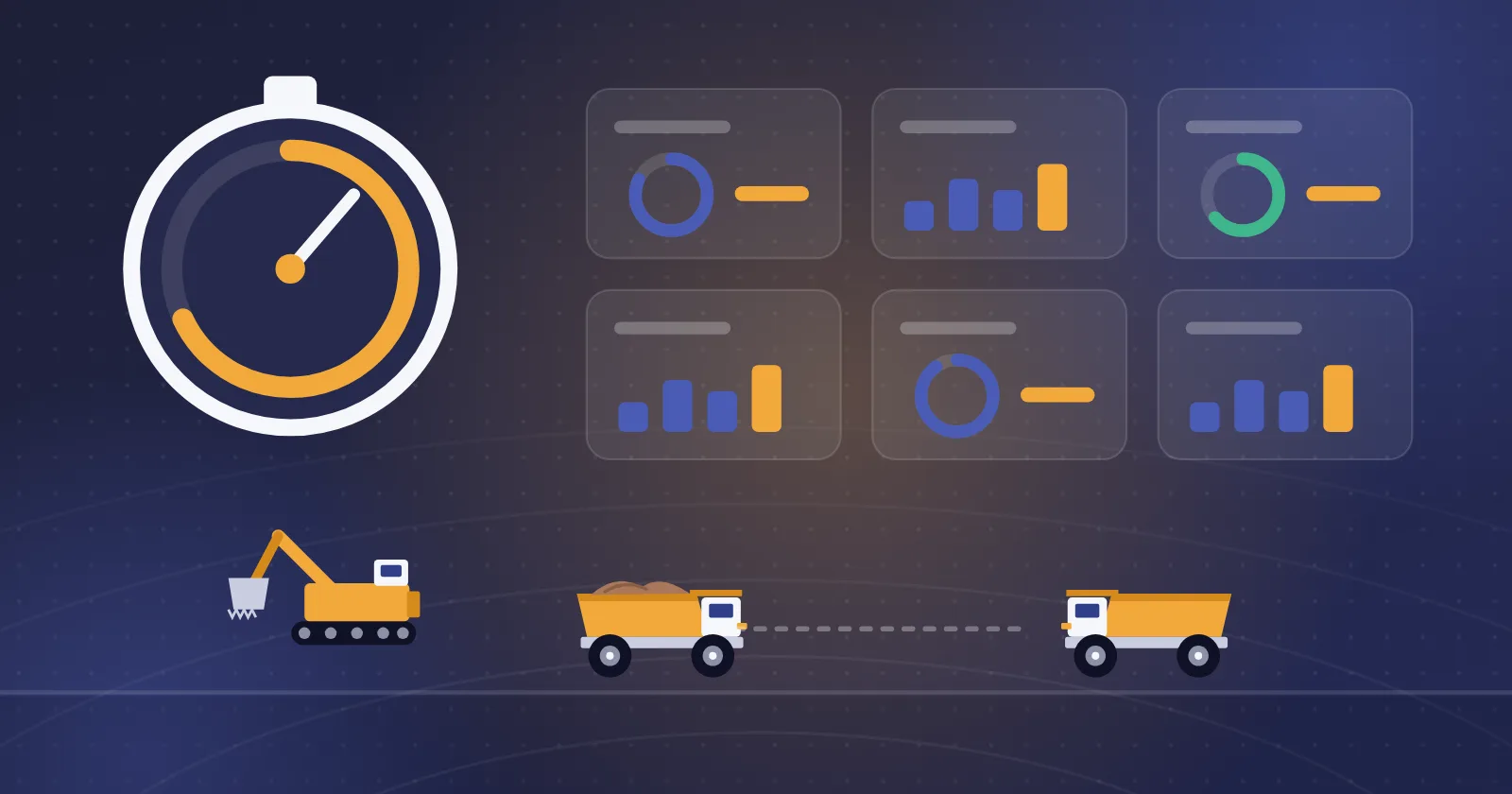
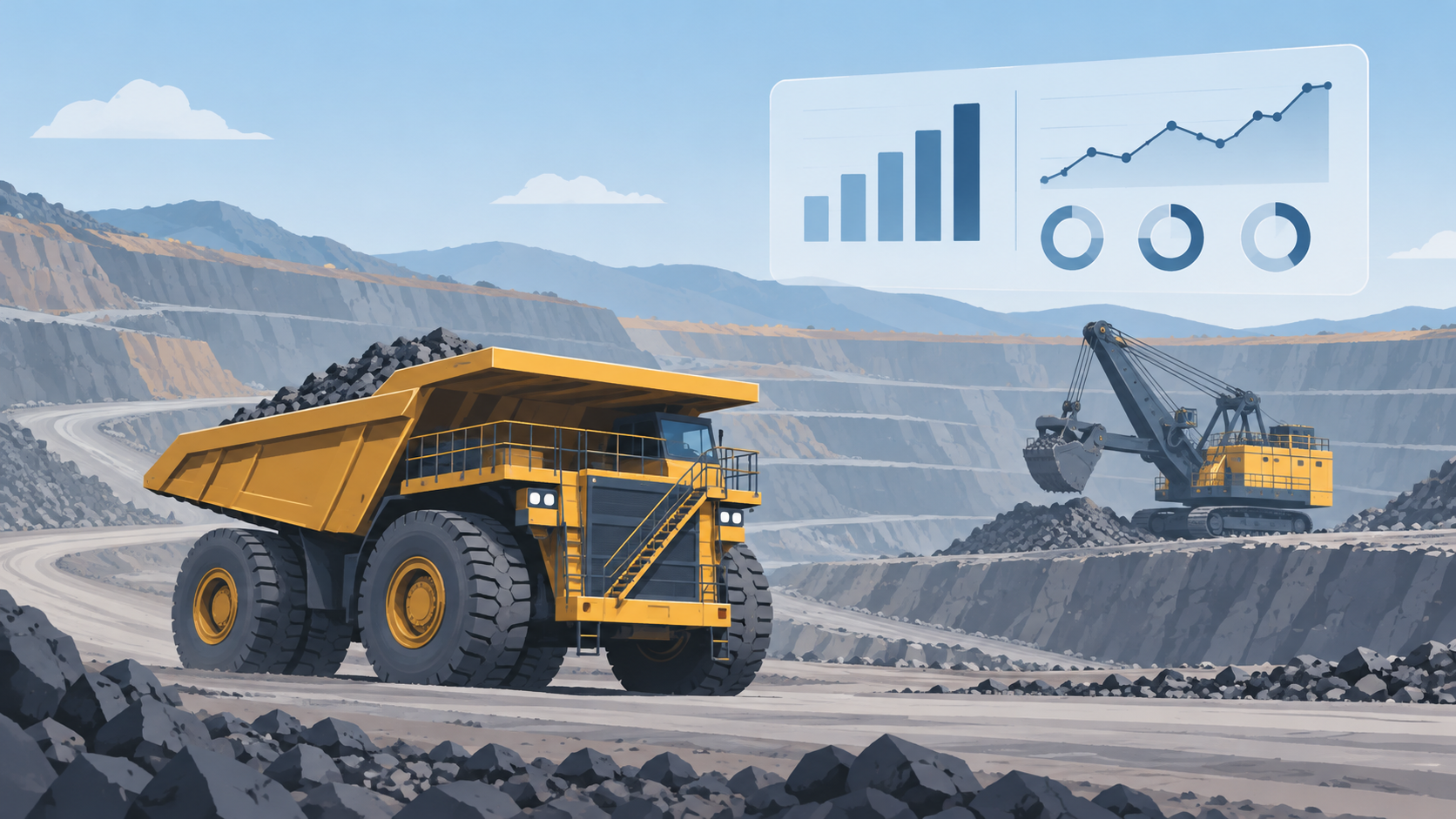
Managing an open-pit mining fleet involves more than keeping haul trucks and loading equipment running. A mine may have sufficient equipment capacity but still struggle to meet production targets because of unnecessary delays, inefficient truck assignments, excessive cycle times, or unplanned downtime.
To identify these problems, mining operators need reliable performance data.
Mining Fleet Key Performance Indicators (KPIs) provide measurable insights into equipment availability, utilization, haulage productivity, and resource efficiency. When analyzed together, these metrics help mine managers understand where operational capacity is being lost and where improvements are possible.
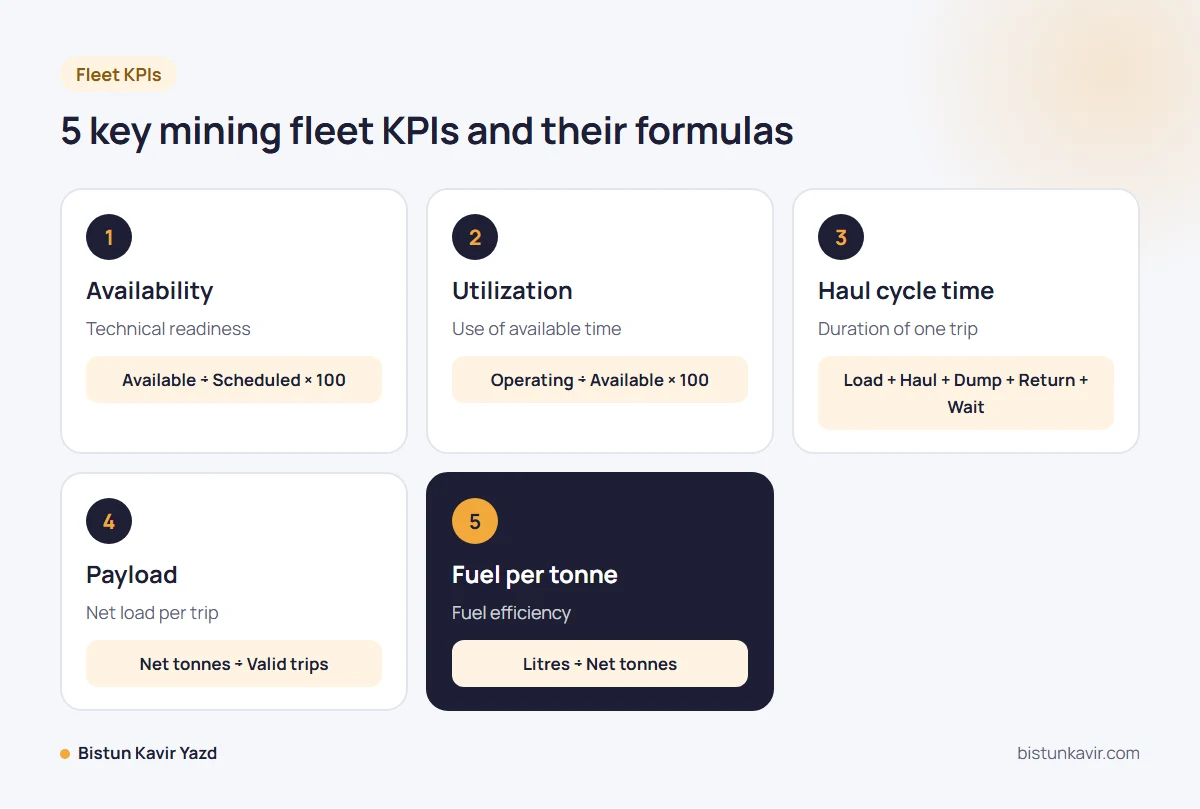
This article explains five essential mining fleet KPIs, how they are calculated, and how they support better decisions in surface mining operations.
What Are Mining Fleet KPIs?
Mining fleet KPIs are measurable indicators used to evaluate the operational performance of mobile mining equipment, including haul trucks, excavators, shovels, and loaders.
They turn equipment activity data into information that supervisors and management teams can use to assess production performance.
For example, knowing that a haul truck's engine operated for ten hours does not establish how productive that truck was. Some of those hours may have been spent hauling material, while others involved queuing, idling, or waiting for assignments.
Effective performance measurement requires distinguishing between these operating conditions.
The Global Mining Guidelines Group (GMG) has published a time classification framework to support more consistent measurement of mobile equipment availability and utilization.
1. Equipment Availability
Equipment availability measures whether a machine is technically ready to perform its intended work during a defined period.
A haul truck experiencing mechanical failures, unplanned repairs, or other maintenance-related downtime may have lower availability than other trucks operating under comparable conditions.
For a simplified shift-level calculation:
Equipment Availability (%) = Available Time / Scheduled Time × 100
Consider a haul truck scheduled to operate for 12 hours. If mechanical downtime accounts for two hours, the machine has ten available hours.
Its calculated availability is:
10 / 12 × 100 = 83.3%
The exact definition of availability may vary depending on whether a site uses physical availability, mechanical availability, or another time classification.
Consistent definitions are essential when comparing performance across equipment groups.
Why Equipment Availability Matters
Lower availability can restrict haulage capacity and disrupt production planning.
Monitoring this KPI helps maintenance teams identify frequently unavailable equipment, investigate recurring failures, and evaluate the effectiveness of maintenance programs.
However, technical availability should not be confused with actual utilization. A machine can be available without being productively deployed.
2. Equipment Utilization
Equipment utilization describes how much of the available equipment time is actually used for operations.
For the measure commonly called Use of Availability, a simplified formula is:
Use of Availability (%) = Operating Time / Available Time × 100
Suppose the haul truck in the previous example has ten available hours but operates for only 8.5 hours.
Its use of availability is:
8.5 / 10 × 100 = 85%
The remaining available time may include standby periods or operational delays, depending on the site's classification system.
A low utilization rate does not automatically mean that more equipment is required. In some cases, existing machines may be underused because of limited loading capacity, poor dispatch coordination, or delays at dumping locations.
Before expanding a fleet, operators should determine whether existing capacity is being used effectively.
3. Haul Cycle Time
Haul cycle time measures the duration of a complete hauling cycle.
Depending on the reporting convention, the cycle may include loading, loaded travel, dumping, empty return travel, and associated queueing or spotting periods.
For example, consider the following cycle:
| Activity | Duration |
|---|---|
| Loading | 5 minutes |
| Loaded travel | 12 minutes |
| Dumping | 3 minutes |
| Empty return | 11 minutes |
| Waiting | 4 minutes |
| Total cycle | 35 minutes |
Reducing unnecessary cycle delays can increase the number of hauling trips available within a shift, provided loading and dumping capacity can accommodate them.
However, comparisons should account for haul distance, road gradients, traffic, payload, and operating conditions.
What Causes Longer Haul Cycles?
Longer cycles may result from truck queues, congested haul roads, insufficient dumping capacity, poor road conditions, or changes in haul distance.
Breaking down cycle time into individual activities makes it easier to distinguish traffic problems from loading delays and other bottlenecks.
This is particularly useful for dispatchers responsible for coordinating truck-shovel operations.
4. Haul Truck Payload
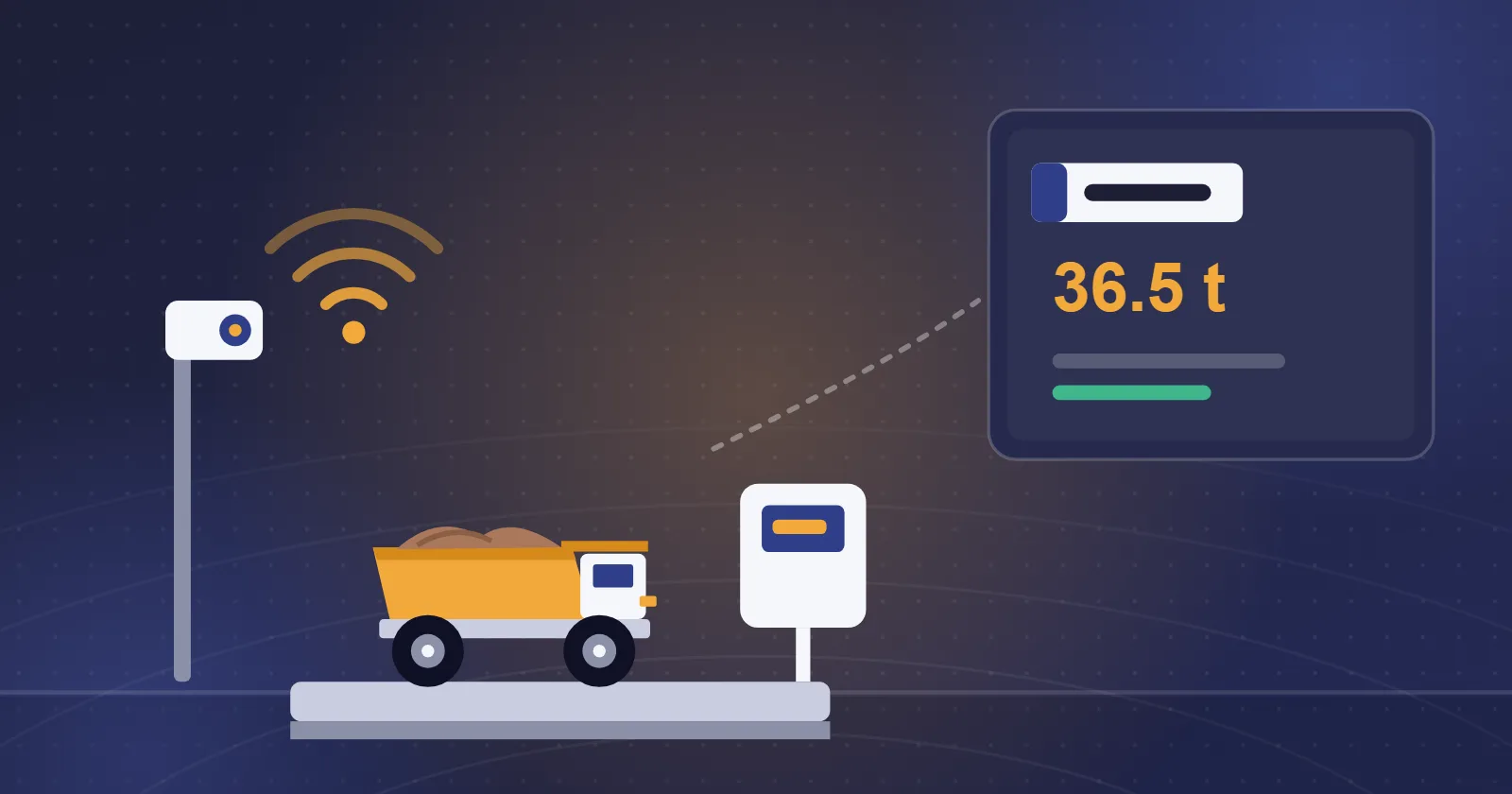
Payload measures the net quantity of material transported by a haul truck during a hauling cycle.
It is an important indicator of loading efficiency and overall material movement.
Average Payload = Total Net Material Hauled / Number of Valid Loaded Trips
Suppose a haul truck completes 14 trips with an average payload of 85 tonnes.
The total hauled material is:
14 × 85 = 1,190 tonnes
Underloading can increase the number of trips needed to move a given quantity of material.
Overloading, however, may create additional mechanical stress and increase equipment safety and maintenance risks.
For this reason, the objective is not simply to maximize the amount carried in every trip. Loading performance should be evaluated against the equipment manufacturer's permissible limits and the mine's target payload range.
Accurate weighing and payload records are important for reliable production reporting.
5. Fuel Consumption per Tonne Hauled
Fuel consumption is a major operating cost in surface mining.
However, comparing total litres consumed by different trucks may be misleading if the machines carry different payloads or operate on different haul routes.
One useful indicator is fuel consumption per tonne of material hauled.
Fuel Intensity (L/t) = Total Fuel Consumed / Total Net Tonnes Hauled
If a haul truck consumes 420 litres of diesel while transporting 1,190 tonnes of material:
420 / 1,190 = 0.353 L/t
This metric provides a basic measure of fuel efficiency relative to haulage output.
For operations with significantly different haul distances, litres per tonne-kilometre can provide additional context.
Fuel performance should also be evaluated alongside road conditions, gradients, idle time, and equipment operating requirements.
How to Use Mining Fleet KPIs Effectively
The value of performance indicators lies in using them to improve operational decisions.
For example, high truck availability combined with low utilization may indicate that available haulage capacity is not being fully deployed.
Long queue times alongside shovel idle periods at other loading points may suggest that truck assignments require review.
An increase in fuel intensity without a corresponding change in production may justify examining equipment condition, haul routes, or operating practices.
These indicators should be interpreted together rather than in isolation.
A shorter haul cycle is not necessarily beneficial if it results in unsafe driving practices or excessive equipment loading.
Supporting Fleet Performance With Bismart
Bismart, developed by Bistun Kavir Yazd, is a mining fleet monitoring and dispatching system designed for open-pit operations.
It focuses on improving operational visibility and supporting fleet coordination.
Access to reliable information about equipment activity, truck assignments, and haulage performance can help mine managers identify operational constraints and assess opportunities for improvement.
By connecting performance measurement with daily operational decisions, mining companies can move toward more structured, data-driven fleet management.
Explore Bismart Mining Fleet Management to learn more about Bistun's approach to mine fleet monitoring and dispatching.
Frequently Asked Questions
What are the most important mining fleet KPIs?
Common indicators include equipment availability, utilization, haul cycle time, payload, fuel intensity, and production per operating hour. The most relevant combination depends on the mine's operational objectives.
What is the difference between availability and utilization?
Availability measures whether a machine is ready to operate. Utilization evaluates how its available time is used.
Can fleet KPIs be measured without a dispatching system?
Yes. Manual records, onboard machine information, and production reports can support KPI calculations. Digital systems can make data collection and reporting more consistent when properly implemented.
Conclusion
Mining fleet performance cannot be assessed using equipment hours or production totals alone.
Availability, utilization, cycle time, payload, and fuel efficiency provide complementary insights into how effectively a mine uses its mobile equipment.
When these KPIs are measured consistently and analyzed together, they provide a stronger foundation for improving haulage operations, maintenance coordination, and production planning.
Technical Reference
Global Mining Guidelines Group — Standardized Time Classification Framework for Surface Mining