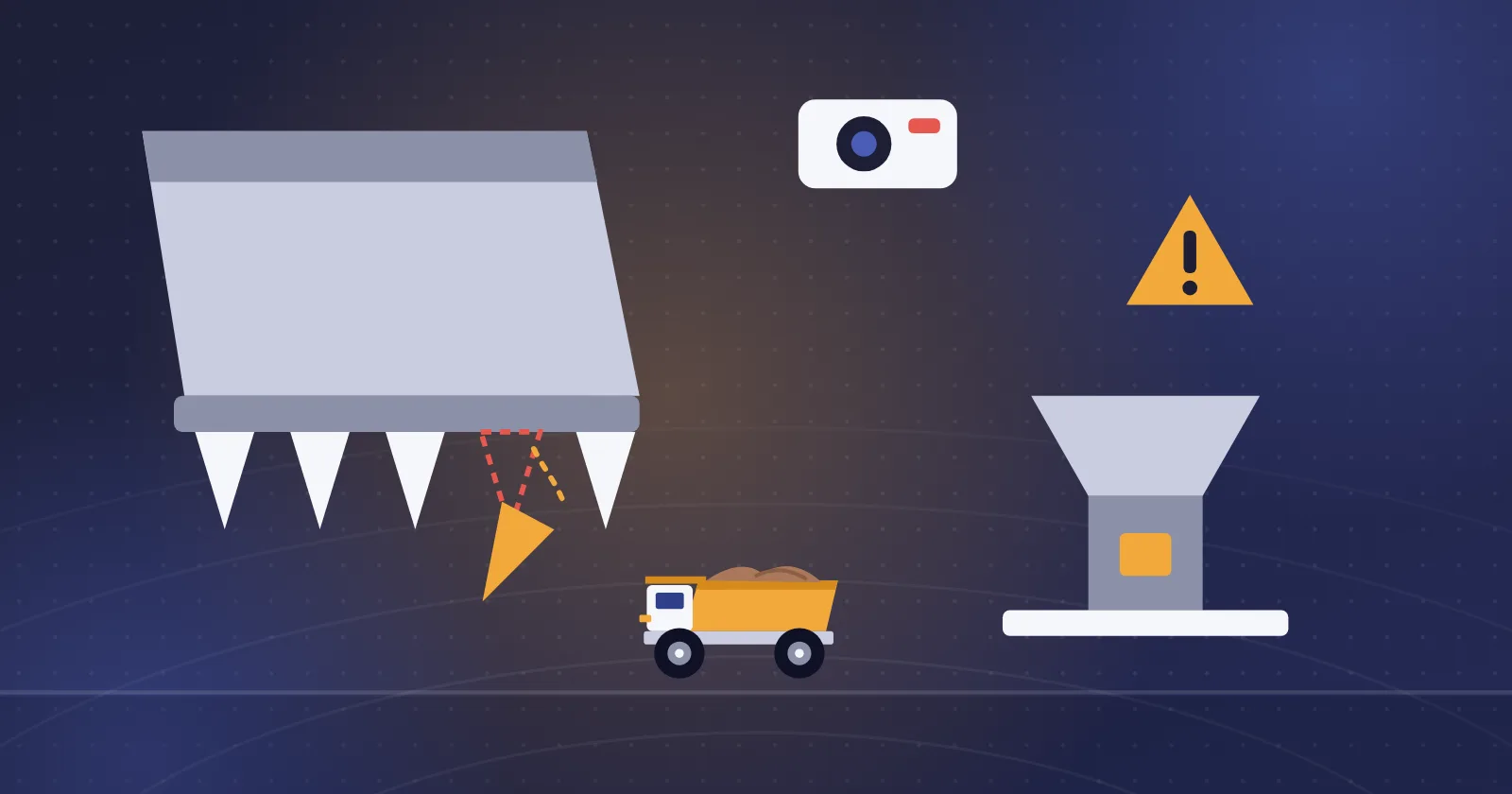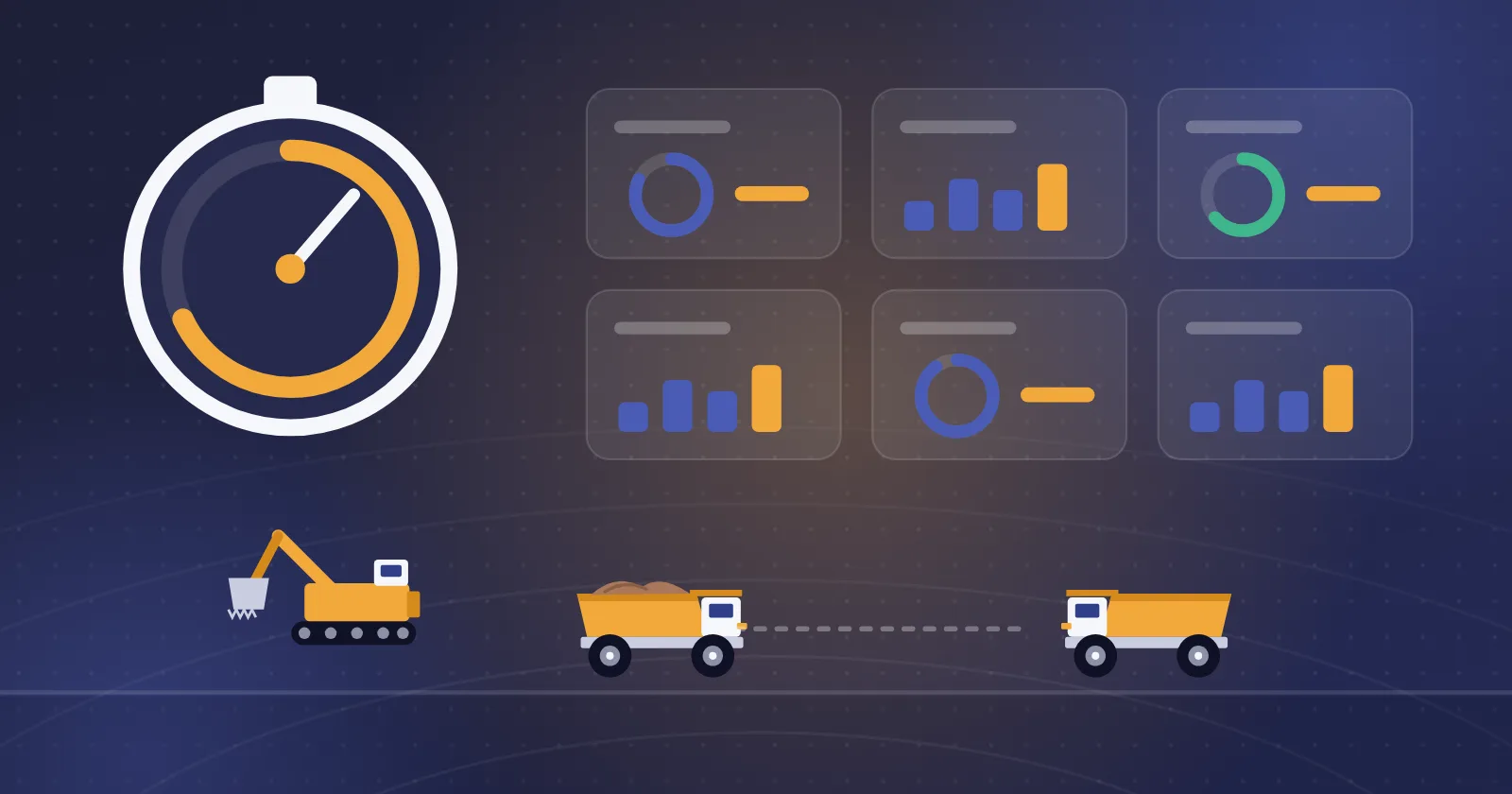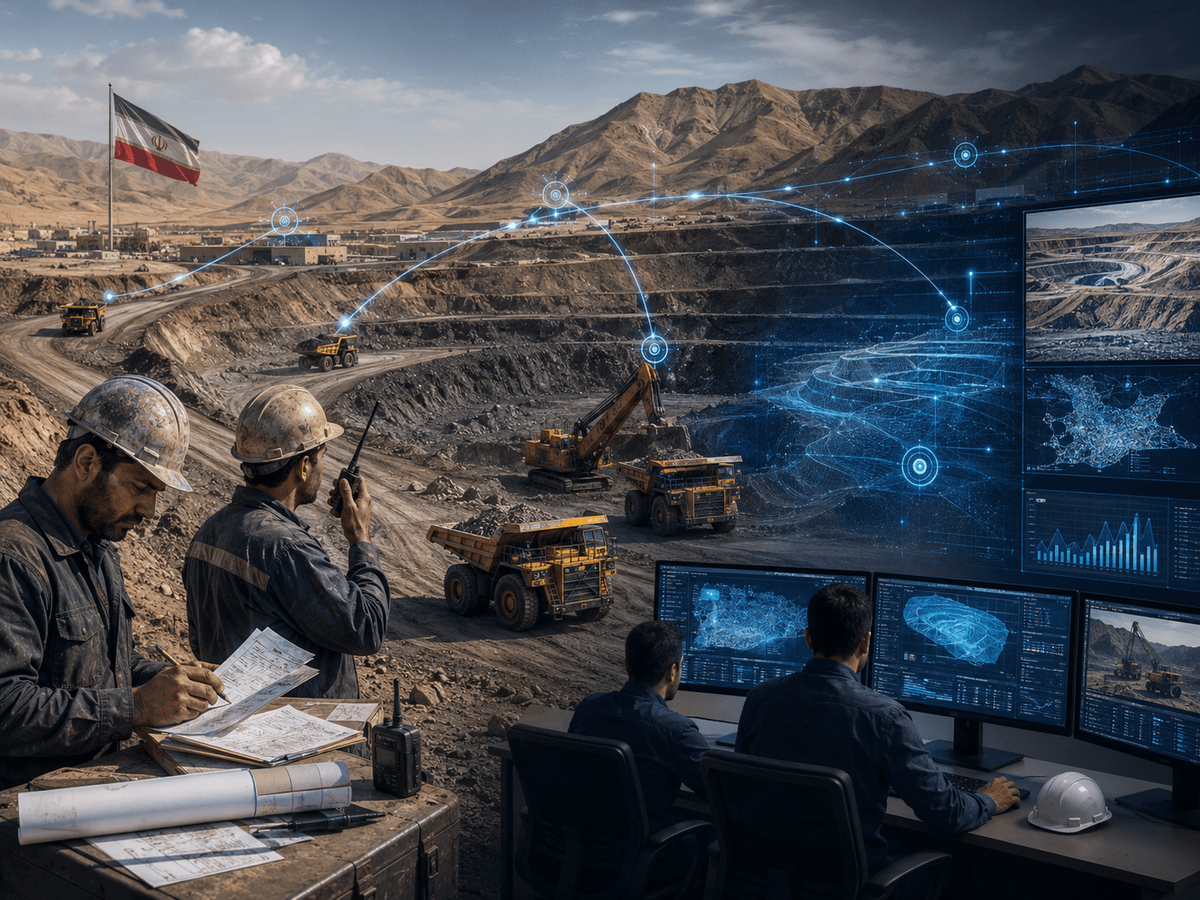
Haul trucks, loaders, shovels, light vehicles and people all moving in the same operating area make mine traffic management a complex problem. Large equipment, extensive blind spots, dust, changing routes and limited operator visibility can all increase the likelihood of a collision, especially when reversing, entering an intersection, loading or approaching the dump.
Mirrors and rear-view cameras solve part of the problem, but they are not enough to actively detect hazards. A collision avoidance system for mining equipment combines cameras, radar, positioning and data processing to monitor the area around the machine, and raises an alarm matched to the level of risk when a person, vehicle or obstacle comes close.
The aim is not to remove the operator's responsibility or replace HSE processes. Its real value lies in reducing blind spots, recording high-risk events and helping the driver and control room make faster decisions.
Why are equipment collisions a major mining risk?
Collision risk in a mine is not just the result of speeding or driver error. The structure of the operating environment and how equipment interacts also play a part.
Haul trucks and heavy machines are usually very tall and long, and the operator's direct view of parts of the surrounding area is limited. A light vehicle or pedestrian may be close by yet invisible from the cab. The problem gets worse when turning, reversing or when loading equipment swings.
Haul roads in a mine also never stay the same. A new working face, a moved stockpile, a crusher stop, maintenance work or a diversion can change traffic patterns. A route that was safe on one shift can become a high-risk point on the next.
Blind spots on heavy machines
A blind spot is an area the operator cannot see directly or with mirrors. Its location and size differ between haul trucks, loaders, shovels and graders.
The most important blind spots usually form in these areas:
- Behind the machine when reversing
- The front area close to the bumper or wheels
- Around the rear wheels
- The side opposite the cab
- The swing radius of a shovel or excavator
- Light vehicles close to a heavy machine
A 360-degree camera can give the operator a fuller picture of these areas, but if the driver is controlling the route, the task and the equipment at the same time, there may not be enough time to watch the display constantly. The system therefore needs to detect hazards and raise a clear alarm, not just show an image.
Interaction between haul trucks, light vehicles and pedestrians
The difference in size and speed between light vehicles and mining machines is a major factor in fleet incidents. A light vehicle may drop out of the haul truck driver's view or stop where the operator does not expect another vehicle.
Pedestrians face a similar risk. Maintenance staff, inspectors, operators or contractors around equipment should be managed through defined routes and work permits. A pedestrian detection system can add a supplementary layer of protection, but it cannot replace the separation of people and machines.
What is a collision avoidance system for mining equipment?
A mining collision avoidance system is a set of sensors, processing equipment and warning devices that detects people, vehicles or obstacles within a hazard zone. Based on distance, speed and direction of travel, the system assesses the level of risk and alerts the operator or control room.
This definition covers several different technologies. To evaluate a solution, you need to know whether the system only displays the surroundings, detects hazards or can also intervene in the machine's movement.
360-degree camera versus collision warning system
A 360-degree or surround-view camera combines images from several cameras around the machine and gives the driver a single view of the surroundings. It improves operator visibility but does not necessarily detect hazards.
In a collision warning system, software or a processing unit analyses data from cameras, radar or other sensors. If a person or vehicle enters the hazard zone, the system raises an audible or visual alarm.
The key differences are:
- A 360-degree camera displays the surroundings.
- A detection system identifies the person or obstacle.
- A warning system communicates the level of risk.
- A collision avoidance system may intervene in the machine's movement.
Collision warning versus collision avoidance
A collision warning system detects a possible hazard and alerts the operator. The final response, such as slowing down or stopping, is up to the driver.
A collision avoidance system sits one level higher. Where the machine and control architecture support it, it may command a speed reduction, prevent the machine from moving off or trigger an emergency stop.
The term "collision avoidance" should not be taken as a guarantee that incidents will be eliminated. Performance depends on sensor quality, environmental conditions, hazard zone settings, machine speed and the operator's response.
What role does proximity detection play?
Proximity detection identifies people, equipment or vehicles that come close. It may use GPS, radio tags, radar or a combination.
Its advantage is that it does not rely on a clear image to determine the relative position of equipment. If it relies only on tags, however, it may miss an obstacle or person without a tag. That is why some projects combine proximity detection with cameras and radar.
How does the system detect a collision risk?
Hazard detection usually involves several steps:
- Receiving data from sensors
- Detecting a person, vehicle or obstacle
- Determining distance and direction of travel
- Assessing the level of risk
- Raising an alarm
- Recording the event for later analysis
The type of sensor determines what the system can detect and how accurately.
Cameras and image processing
Cameras record the surroundings and can be used to show blind spots or detect people and vehicles. In image-processing systems, an algorithm tries to separate people, cars, heavy machines or obstacles from the background.
The advantage of cameras is that they give the driver understandable visual information. As well as receiving an alarm, the operator can see its cause on the display.
Camera performance may be affected by:
- Dust
- Direct sunlight
- Darkness
- Rain
- Mud or dirt on the lens
- Machine vibration
- Obstructed views
- A person's posture
Mounting position, camera angle, lens cleaning and periodic calibration are therefore very important.
Radar and obstacle detection
Radar sends and receives waves to estimate the distance and movement of objects. It is less sensitive to changes in light and can provide complementary information when camera images are poor.
Radar may not, however, be able to identify the type of object on its own. The system may detect an obstacle but need camera data to tell a person from a piece of equipment.
Combining cameras and radar offers two advantages:
- Radar detects the object's distance and movement.
- The camera identifies the type of object and its visual position.
GPS, tags and vehicle-to-vehicle communication
In positioning-based systems, the coordinates of machines and vehicles are compared. If two machines come within a defined distance or their paths create a collision risk, an alarm is raised.
This approach is used to manage traffic on haul roads, at intersections and at low-visibility points. Positioning accuracy and communication latency must, however, suit the speed and size of the fleet.
Proximity tags can also be fitted to people or light vehicles. A heavy machine receiving the tag's signal detects its entry into the hazard zone.
The main limitation is that people or equipment without tags may not be detected. Tags should therefore be part of a complete control system, not the only means of prevention.
Sensor fusion
No sensor performs best under all conditions. Combining several data sources, known as sensor fusion, can reduce the weaknesses of each technology.
For example:
- The camera identifies the type of object.
- Radar measures distance and relative speed.
- GPS determines the machines' positions on the route.
- CAN or J1939 data provides the machine's speed and direction.
By combining this data, the system can tell whether an object is simply near the machine or genuinely on a collision course.
How are hazard zones and alarm levels defined?
If the system raises the same alarm for every nearby object, unnecessary alarms multiply and the driver may become desensitised to them.
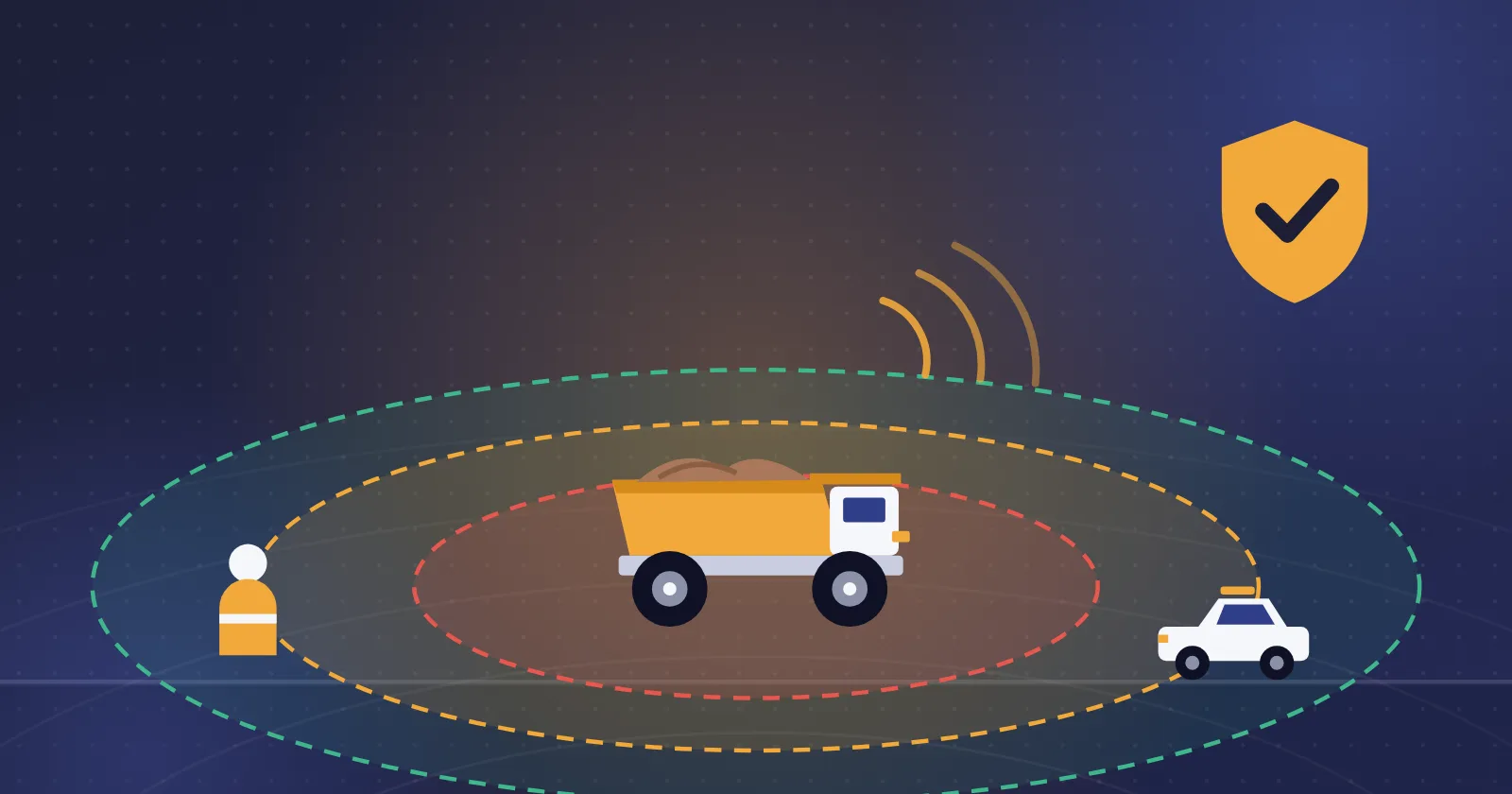
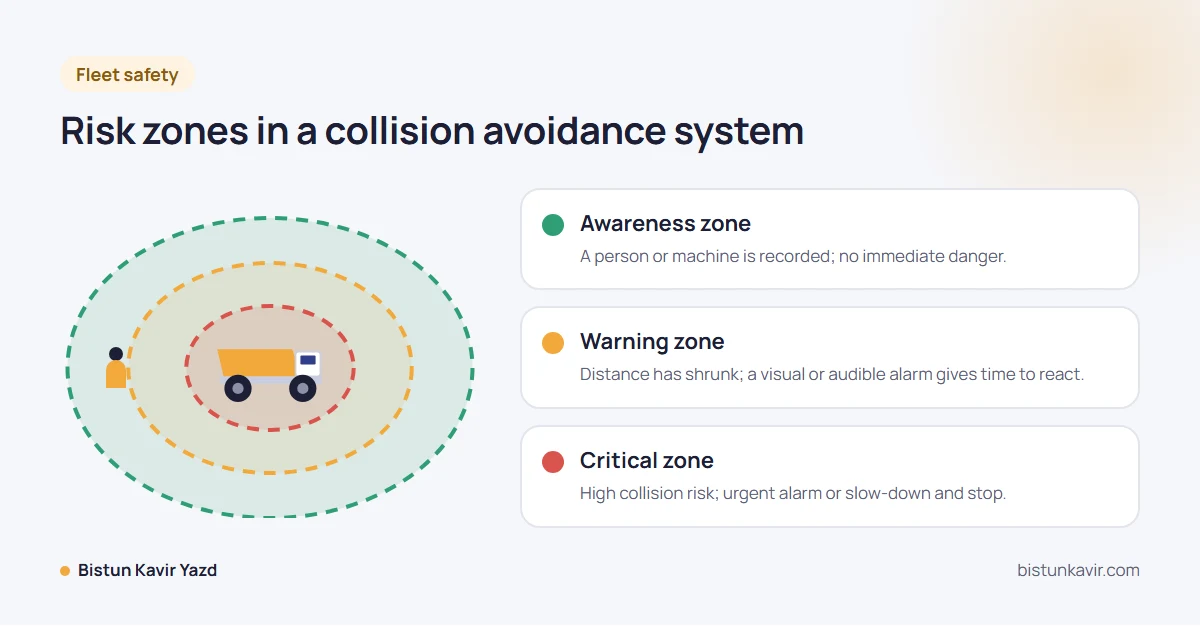
To prevent this, the area around the machine is divided into several risk zones.
Awareness, warning and critical zones
The awareness zone is where the presence of a person or machine is recorded but there is no immediate danger. At this level, only an icon may appear on the display.
The warning zone is triggered when the distance shrinks or the paths of two vehicles converge. A visual or audible alarm at this stage gives the operator time to react.
The critical zone is where the likelihood of a collision is higher. The alarm must be clearer and more urgent. In systems with intervention capability, this level may trigger a speed reduction or stop.
The effect of speed, distance and direction
Distance alone is not enough to identify a hazard. A vehicle may be close but travelling on a safe parallel path, while another further away may be approaching the machine at high speed.
A more accurate system should consider these variables:
- Distance
- Machine speed
- Speed of the other object
- Direction of travel
- Angle of approach
- Estimated time to collision
- Gear status
- Operating zone
Setting risk zones according to speed also matters. A haul truck's stopping distance at high speed is not the same as when it is moving slowly at the loading point.
Visual and audible alarms and automatic intervention
A visual alarm usually shows the location of the hazard on the display. An audible alarm is used to get the driver's attention quickly. Some systems can also use haptic alerts or send messages to the control room.
More alarms do not necessarily mean more safety. An alarm should:
- Be timely.
- Show where the hazard is.
- Match the level of risk.
- Be recognisable to the operator.
- Not conflict with the machine's other alarms.
Automatic intervention should only be enabled if it is compatible with the machine's control system, route conditions and operating requirements. A heavy machine stopping suddenly in the wrong place can itself create a secondary risk.
Which mining scenarios does the system cover?
A collision avoidance system should be designed around each mine's real scenarios. A solution suited to a workshop area may need different settings on a haul road or around a shovel.
Reversing and blind spots
Reversing is one of the most common scenarios for cameras and radar. The system can detect a person, vehicle or obstacle behind the machine and raise an alarm according to distance.
On haul trucks, loaders and graders, the detection zone must be set to match the machine's dimensions and turning angle. A single camera at the back is not enough to cover the wheels and sides.
Heavy machine and light vehicle collisions
A light vehicle may be beside or in front of a haul truck and out of the operator's sight. A combination of 360-degree cameras, proximity tags and positioning can detect the vehicle's presence.
To reduce this risk, technology should be backed by mine traffic rules:
- Minimum separation distance
- No overtaking
- Designated light vehicle parking
- Radio communication
- Right of way for heavy machines
- Dedicated routes
Pedestrians entering the hazard zone
Detecting people around loaders, shovels, crushers or workshops is an important use of image processing and wearable tags.
The system should never be treated as permission for people to enter a hazard zone, however. The main controls must be separating pedestrian routes, work permits, shutting down equipment and lockout/tagout.
Intersections, queues and the shovel area
At mine intersections, walls or dust may limit drivers' visibility. A positioning-based system can detect two machines approaching an intersection and raise an alarm.
In loading and dumping queues, machines are close together. If the hazard zone is set without regard to queue conditions, the system will alarm constantly. The difference between permitted proximity in a queue and a dangerous approach must therefore be defined.
In the shovel area, the truck must be positioned at a defined spot. Entering too early or stopping within the swing radius can be dangerous. The system can monitor the swing radius or exclusion zone.
Collisions with equipment or fixed obstacles
Walls, columns, workshop equipment, fuel facilities, conveyors and fixed structures can also fall within a machine's blind spots.
A map of fixed obstacles and geofencing can be used to warn of entry into a restricted area. Cameras and radar can detect obstacles that are not on the map or are temporarily in the way.
How does near-miss data improve safety?
The system's value is not just in the moment-to-moment alarm. Recording and analysing near misses can reveal recurring weaknesses in operations.
A near miss is an event in which no collision occurred, but the distance, speed or movement shows that an incident was possible.
For each event, it is best to record:
- Time
- Location
- Machine or operator
- Type of object detected
- Alarm level
- Distance
- Speed
- Direction of travel
- Time spent in the hazard zone
- Operator response
By aggregating this data, the HSE team can determine:
- Which intersection has the most alarms.
- Which route has recurring blind spots.
- When in the shift risk increases.
- Which type of machine is most often involved.
- Which alarms are false or unnecessary.
- Which operational change needs to be made.
Near-miss analysis should not be used only to assess individual drivers. Road conditions, task type, lighting, traffic volume and machine condition must also be considered.
Limitations and errors of collision avoidance systems
No detection system is error-free. Ignoring its limitations can create false confidence and make operators overly dependent on technology.
Dust, light and environmental conditions
Dust can degrade camera images or cover sensor surfaces. Direct sunlight, darkness, rain and fog also affect detection quality.
To manage these conditions, consider:
- Choosing the right sensor
- Correct mounting position
- Physical protection
- Regular cleaning
- Sensor health checks
- Camera obstruction alarms
- Combining cameras with radar or GPS
False alarms and alarm fatigue
False alarms can be caused by detecting a harmless obstacle, incorrect zone settings or normal traffic conditions.
If a driver receives constant alarms at every stop or in every queue, the chance of ignoring a real alarm rises. To reduce alarm fatigue:
- Set zones according to real scenarios.
- Use staged alarm intensity.
- Take speed and direction into account.
- Analyse repeated alarms.
- Collect operator feedback.
- Refine settings after the pilot.
Sensor calibration and maintenance
Camera mounting angle, radar height and machine dimensions affect the detection area. A single setting is not suitable for every machine.
The maintenance process should include:
- Physical inspection
- Alarm testing
- Checking blind-spot coverage
- Cleaning
- Checking cables and connections
- Software updates
- Recalibration after repairs or sensor relocation
Operator responsibility and HSE controls
A collision avoidance system is a supporting control. The operator must still respect speed limits, safe distances, traffic routes and mine procedures.
This technology should be used alongside the following controls:
- Safe route design
- Separation of people and machines
- Traffic signs
- Speed management
- Training
- Radio communication
- Fatigue management and driver alertness monitoring
- Daily inspections
- Near-miss review
- Access control to high-risk areas
Criteria for choosing the right system for a mining fleet
A solution should not be chosen on the number of cameras or claims of artificial intelligence alone. The system must match the mine's hazard scenarios and operating structure.
The main criteria are:
Type of machines
Haul trucks, loaders, shovels, graders and light vehicles have different blind spots and movement patterns. The solution must be configurable for each machine.
Hazard scenario
Define the main objective:
- Pedestrian detection
- Preventing vehicle collisions
- Reversing coverage
- Intersection control
- Swing radius monitoring
- Near-miss recording
- Automatic intervention
Environmental conditions
The system should be tested under real mine conditions, including dust, vibration, temperature and changing light.
Alarm and intervention level
Some mines only need alarms, while other operations also consider motion inhibit or speed reduction. The level of intervention must be compatible with the machine's functional safety.
Connection to the control room
Recording alarms, event locations and near-miss reports makes management analysis possible. Connecting the system to a fleet management and dispatching system can give a fuller view of incident conditions.
Offline operation
Local alarms should not depend on a permanent connection to a server. When the network is down, the system should keep detecting and alarming inside the machine and store data for later transmission.
Compatibility with a mixed fleet
Mines usually run machines of different brands and models. Before buying, check installation constraints, CAN inputs, ancillary equipment and integration options.
Support and calibration
Initial installation is not the end of the project. The system needs testing, training, zone tuning and alarm reviews, so the supplier's support capability and technical presence matter a great deal.
Steps for piloting a collision avoidance system
A pilot makes it possible to test the system under real mine conditions before rolling it out to the whole fleet.
1. Identify high-risk scenarios
Review incident records, near misses, site inspections and operator feedback. The goal should be specific, for example reducing reversing risk or controlling interaction between light vehicles and haul trucks.
2. Select pilot machines
Choose machines that represent real fleet conditions. Selecting only one low-traffic machine may not produce results that can be generalised.
3. Define hazard zones
Set risk zones according to machine dimensions, speed, route and work scenario. Using a fixed zone for every situation causes unnecessary alarms.
4. Install and calibrate
Check camera coverage, radar angle, the display, audible alarms and communications. Testing should include people, light vehicles and obstacles from different directions.
5. Train operators
Drivers must know what each alarm means, how to respond and what to do if the system fails. Technology without operator understanding can have limited effect.
6. Record alarms and near misses
The number of alarms alone is not a measure of success. Determine how many were genuine, unnecessary or false and how the operator responded.
7. Refine settings
Once initial data is available, adjust zones and alarm intensity. This step is essential to prevent alarm fatigue.
8. Evaluate and roll out
Evaluate the pilot on the reduction of high-risk events, detection quality, operator acceptance and maintainability. Then roll out in stages to other machines.
Conclusion
A collision avoidance system for mining equipment is more than a 360-degree camera. A complete solution must detect people, machines and obstacles, analyse distance and direction, raise alarms matched to the level of risk and record near misses for HSE analysis.
Cameras, radar, GPS and proximity tags each cover part of the problem. The right architecture depends on the fleet type, hazard scenarios, environmental conditions and the level of intervention required.
More important than installing equipment is integrating the technology with route design, operator training, speed management, sensor maintenance and event analysis. The system helps reduce risk when it is used as part of a comprehensive fleet safety process.
To choose the right solution, first assess blind spots, equipment interactions and the most frequent collision scenarios in your mine. A pilot on part of the fleet also allows hazard zones to be fine-tuned and the system's performance to be checked under real conditions.
Frequently asked questions
What is the difference between a 360-degree camera and a collision avoidance system?
A 360-degree camera combines images around the machine and gives the operator a fuller view. A collision avoidance system also detects people, machines or obstacles and raises alarms based on distance, speed or direction. Some systems can also reduce speed or prevent the machine from moving.
Can the system detect pedestrians?
With image processing, radar or proximity tags, people can be detected. Accuracy depends on lighting, dust, sensor position, the person's posture and system settings. Pedestrian detection should be used as a supplementary layer alongside separating pedestrian and machine routes.
Can the system be fitted to older machines?
Many camera, radar and local alarm features can be installed on older machines without full dependence on the ECU. Features such as reading speed from CAN, motion inhibit or automatic intervention depend on the machine's electrical and control architecture and must be assessed model by model.
Does dust affect system accuracy?
Yes. Dust can degrade camera images or cover sensor surfaces. Proper mounting, sensor protection, regular cleaning and combining cameras with radar can reduce its effect. System performance should be tested under real mine conditions before wide deployment.
What is the difference between collision warning and collision avoidance?
Collision warning detects the hazard and alerts the operator, but the final response is the driver's. Collision avoidance may also intervene in the machine's operation, for example by reducing speed or preventing it from moving off. Intervention depends on the machine type and system architecture.
Does the system work if the network goes down?
In-cab alarms are best not dependent on a permanent server connection. The local processing unit should receive sensor data and raise alarms on its own. Event data can be stored on the device and sent to the server or control room once the connection is restored.
How are false alarms reduced?
Reducing false alarms depends on setting risk zones correctly, considering speed and direction, calibrating sensors and analysing pilot data. Permitted situations such as queuing or parked equipment must also be separated from hazard scenarios. Operator feedback is important for refining settings.
How is near-miss data reported?
The system can record the time, location, distance, type of hazard, alarm level, machine and duration of each event. This data is analysed in an HSE dashboard or fleet management system to identify high-risk points, recurring alarms and behavioural or operational patterns.