
- Detection time
- Under 1 second
- Monitoring coverage
- 24/7
- Pilot start
- 1–3 machines
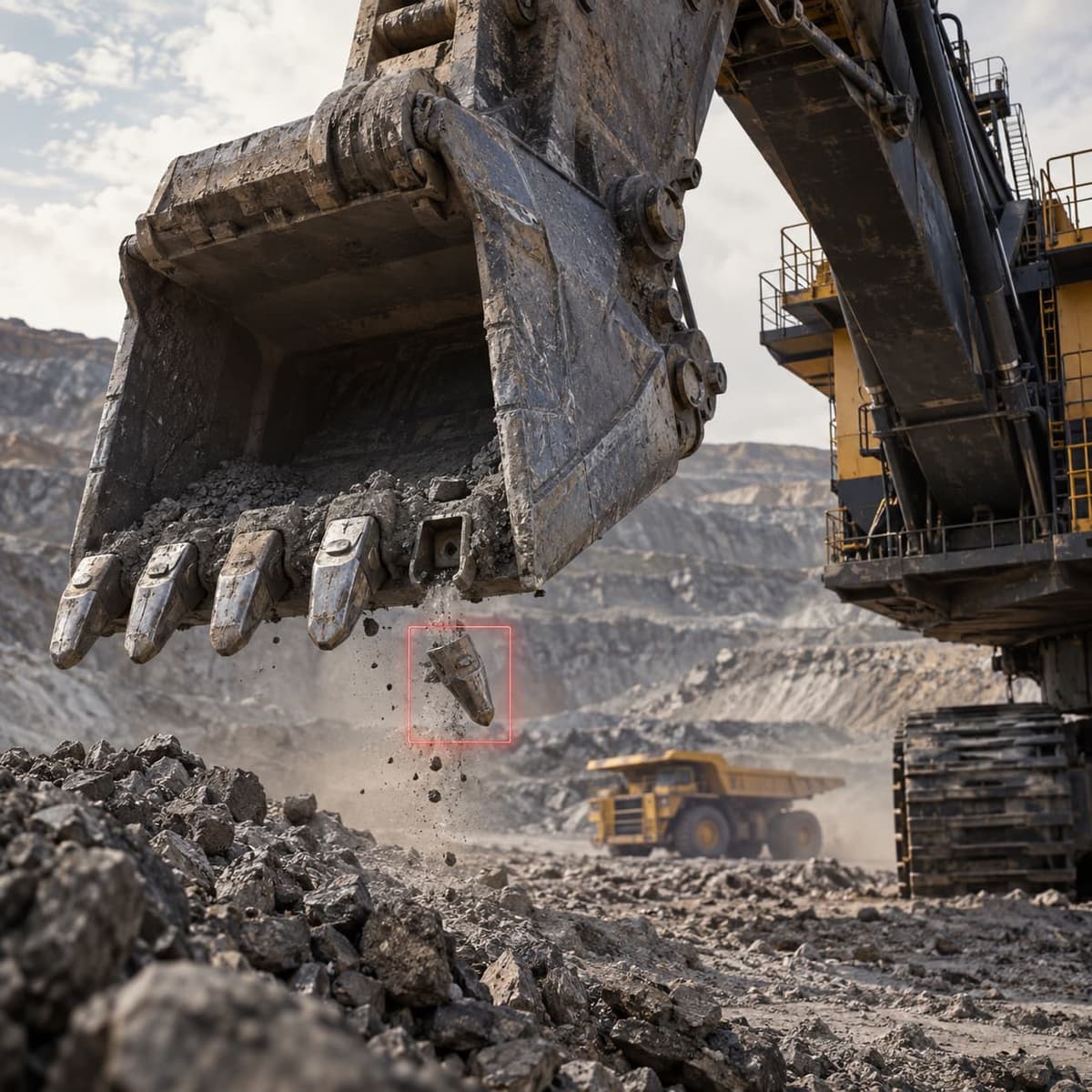
A lost shovel tooth: a small part, a big problem
Manual, visual detection is slow and error-prone, long shifts add pressure, and every hour of crusher downtime is extremely costly.
- Severe crusher damage
- Sudden production line stoppage
- High repair and replacement costs
- Safety risk for staff clearing jams
Automatic, real-time shovel tooth monitoring
- 1
Shovel / loader
Loading machine
- 2
Sensor or camera on the bucket
Each tooth monitored by image processing
- 3
Processing unit
Real-time analysis
- 4
Tooth loss detected
Identified in under 1 second
- 5
Cab and control-room alarms
Instant local and central alarm
Key benefits for your mine
Fewer emergency crusher stoppages
Instant detection lets you stop the feed before the tooth passes along the conveyor.
Lower repair costs
A single lost tooth can cause very costly damage — the system stops it before it happens.
Longer life for critical equipment
Keeping hard metal objects out reduces mechanical shock on shafts and bushings.
Better safety
Less need for manual intervention and staff near equipment under repair.
24/7 monitoring free of human error
No fatigue — day and night, every shift.
Shovel performance analytics
Tooth-loss history informs decisions on tooth quality, loading methods and maintenance.
Capabilities
- Instant, automatic detection
- Covers several teeth per bucket at once
- Fits shovels, loaders and other loading machines
- Each shovel's status shown on the control-room dashboard
- Multi-level alarms: early warning and critical
- Connects to monitoring/SCADA or dispatch systems
- Industrial design — resistant to dust, vibration and moisture
- Works day and night (with auxiliary/IR light if needed)
Before and after installation
| Metric | Without the system | With the monitoring system |
|---|---|---|
| Detection time | minutes to hours (manual) | under 1 second (automatic) |
| Likelihood of a tooth entering the crusher | high | very low |
| Cost of sudden stoppages | billions per year | significantly reduced |
| Monitoring coverage | only during inspections | 24/7 without interruption |
| Risk of human injury | high | minimal |
How does the system work?
- 1Install sensor/camera
- 2Online monitoring
- 3Detection & alarm
- 4Logging & reporting
Integrated with control systems
Alarms go to these destinations, and reports can be exported for maintenance and HSE.
- Mine central control room
- Shift supervisor
- Dispatch or monitoring system
- Shovel operator (in the cab)
- Report on number and location of lost teeth
- Reports by shovel, shift and date
System cost & payback
Your questions answered
Which shovels or loaders can it be installed on?
It fits most shovel and loader models; before a full rollout, a field pilot can be run on one or more shovels.
How does it cope with heavy dust or rain?
The industrial design withstands the dust, vibration, moisture and temperatures of a mine site.
How are alarms delivered to the control room and operator?
A local alarm in the cab and a central alarm to the control room, shift supervisor and dispatch or monitoring system.
What reports are available for maintenance and HSE?
Number and location of lost teeth, reports by shovel/loader, shift and date, trend charts and tooth quality analysis across brands.

Your mine could be our next project
Our consultants are ready to answer every question on your path to a smarter mine.
Yazd, Motahari St., Eqbal Science & Technology Park, Al-Zahra Building, DIACO Mining Technology Development Center
Request an initial mine review
Three short steps — it takes less than a minute.
Step 1 of 3 · Contact details